What is Annual Shradh Ceremony?
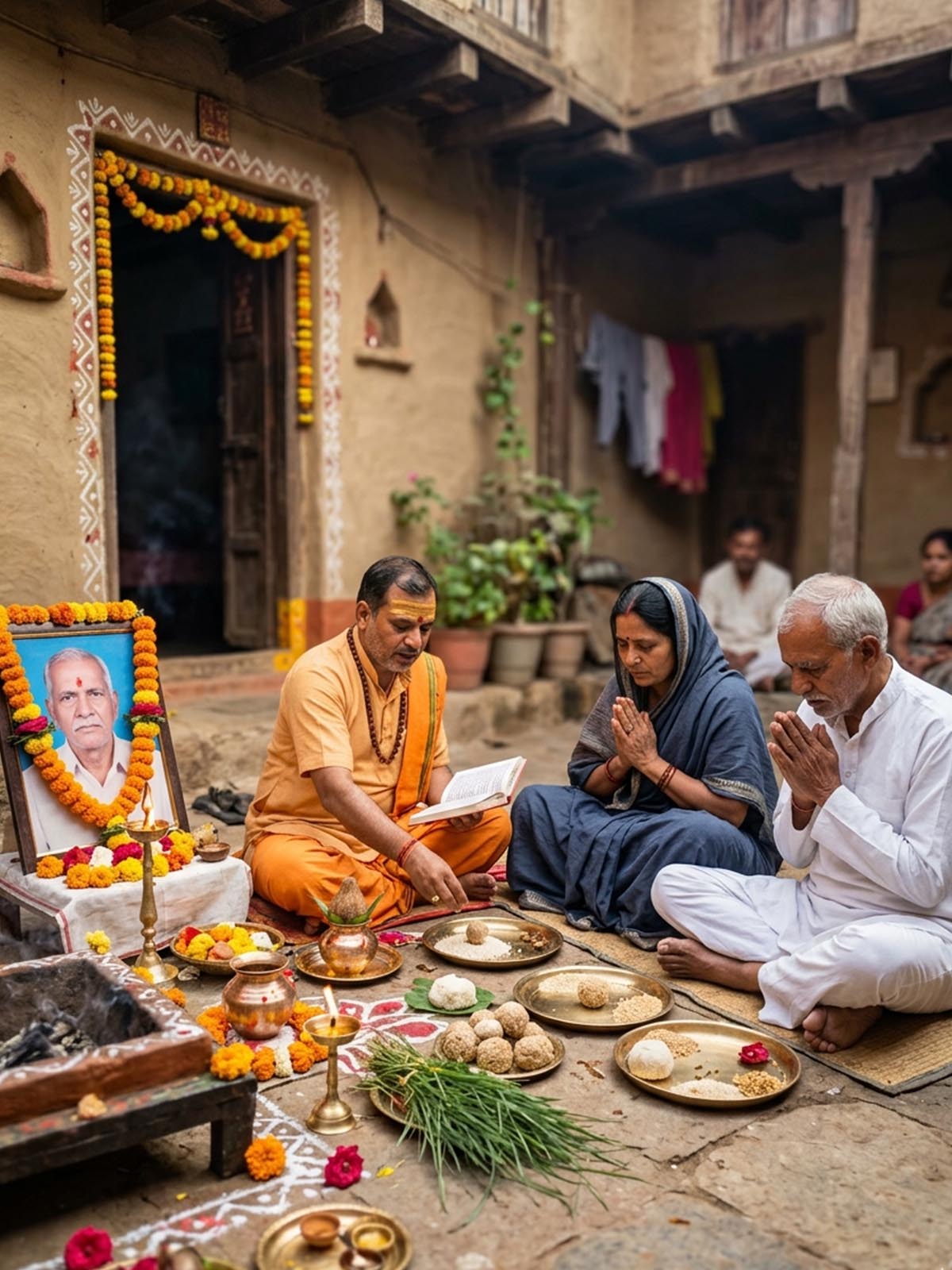
Shradh (also spelled Shraddha) is a sacred Hindu ritual performed to honor and offer peace to the souls of departed ancestors (Pitru). The Annual Shradh is performed on the death anniversary (tithi) of the deceased, as well as during the Pitru Paksha — the 16-day lunar period dedicated to ancestor worship.
The word "Shradh" comes from "Shraddha" meaning faith and devotion. It is believed that performing Shradh with sincerity ensures that the souls of ancestors receive nourishment, attain peace, and bless the living family members with health, prosperity, and happiness.
At Prey Pandit, our experienced pandits perform the complete Shradh Karma — including Pind Daan, Tarpan, and Brahmin Bhojan — with full Vedic procedures and compassion.
Shradh Ceremony Samagri
The following items are required for the Annual Shradh Ceremony. Our pandit will guide you through the arrangement:
- Rice (Akshata) and Black Sesame Seeds (Til)
- Barley Flour (Jau ka Atta) for Pind
- Gangajal (Holy Water)
- Kusha Grass (Darbha)
- Tulsi Leaves
- White Flowers (Preferably)
- Incense Sticks and Camphor
- Ghee Diyas and Cotton Wicks
- Panchapatra and Udharani
- Copper Vessel (Tambe ka Lota)
- Banana Leaves or Patra
- Cooked Food (Kheer, Rice, Dal, Sabzi)
- Cow's Milk and Honey
- Sacred Thread (Yagnopavit)
- Sandalwood Paste and Kumkum
- Betel Leaves and Betel Nuts
- Coins for Offering
- Cloth for Brahmin (Dakshina)
How is Annual Shradh Performed?
Our pandits follow the complete Shradh Karma Vidhi as prescribed in the Garuda Purana and Dharmashastra:
Why Book a Pandit for Shradh Ceremony?
Shradh Karma requires precise knowledge of the deceased's details, correct mantras, and proper Vidhi. A trained pandit ensures the ritual reaches the ancestors:
📜 Correct Sankalp
The Sankalp must include the correct name, gotra, and tithi of the deceased. Our pandits ensure this is done accurately.
💧 Proper Tarpan
Tarpan mantras must be chanted correctly for each generation of ancestors. Our pandits are trained in this precise procedure.
🍚 Pind Daan Expertise
The preparation and offering of Pind requires specific mantras and procedures. Our pandits ensure every Pind reaches the ancestors.
⏰ Correct Tithi
Shradh must be performed on the correct tithi (lunar date). Our pandits help identify the right date as per the Hindu calendar.
😌 Emotional Support
Our pandits perform the ceremony with compassion and sensitivity, making the experience meaningful and comforting for the family.
When to Perform Annual Shradh?
Annual Shradh is performed on the death anniversary tithi of the deceased as per the Hindu lunar calendar. The most auspicious period for Shradh is Pitru Paksha — the 16-day period in the Hindu month of Bhadrapada (September–October). Shradh can also be performed on Amavasya (New Moon) of any month, on Gaya Tirth, or at sacred rivers like the Ganga. It should ideally be performed during the afternoon (Kutup Muhurat).
Importance & Benefits of Shradh Ceremony
Performing Shradh with sincerity and devotion brings immense blessings from the ancestors to the living family members.
Ancestor's Peace
Shradh ensures the souls of departed ancestors attain peace, liberation (Moksha), and freedom from the cycle of rebirth.
Pitru Dosha Removal
Regular Shradh removes Pitru Dosha from the family horoscope, which can cause obstacles in marriage, career, and health.
Family Prosperity
Ancestors who are satisfied through Shradh bless the family with health, wealth, happiness, and success in all endeavors.
Fulfillment of Duty
Performing Shradh is considered one of the highest duties (Dharma) of a child towards their parents and ancestors.